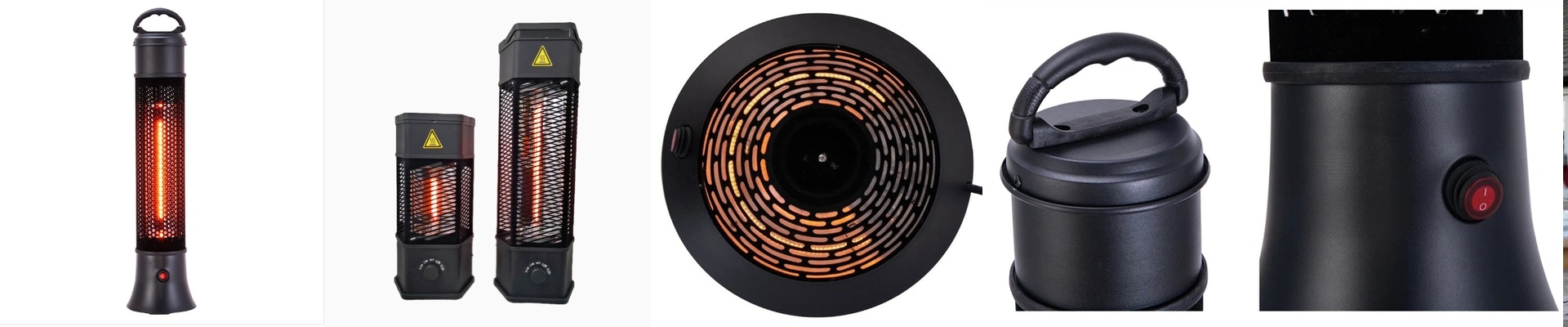

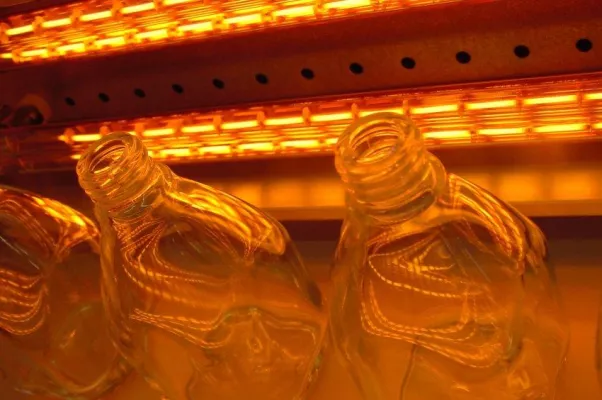
On the line, preheat sets the whole tempering run. If the thermal field is uneven, you’ll see stress marks, roller wave, and flatness that’s off spec—then the furnace pays for a problem that started upstream. We built our preheat lamp to nail a repeatable temperature fast and hold it across the full width, so the furnace sees a uniform, predictable sheet every time. The core is near-infrared (NIR) quartz heating matched to glass emissivity. It dumps energy directly into the glass with minimal convection interference. The lamp comes up in seconds, not minutes, and the focused output keeps the edge profile stable—exactly what you need when you’re running low-e, coated, or laminated glass that doesn’t like thermal shock. Power density is tuned for glass preheat, not general heating, and the control tracks setpoints accurately through the ramp so the entry temperature stays inside the window. Here’s why that matters: uptime and yield live in seconds per sheet. Uniform preheat cuts breakage at the quench, trims scrap from edge stress, and keeps optical quality consistent. Energy use drops because the lamp heats on demand and shuts down when the conveyor stops, instead of idling a big oven. The module drops into standard mounts and interfaces, so you can replace aging halogen or older lamp packs without reworking the line. Installation is straightforward, but alignment is tight. You have to position and focus the lamp to the glass surface and track; otherwise, hot spots or shadowing show up as repeatable defects. Match voltage and connectors to your machine, and plan for clean power—voltage dips shift output and make the setpoint drift. Keep it within the rated duty cycle, and you’ll get stable cycles, fewer rejects, and predictable lamp life.