
On the glass processing floor, drying is where you stop chasing the process and start owning it. Coatings need to cure evenly across the pane. Lamination films have to hit the right temperature profile without scorching the interlayer. Insulating glass beads need consistent energy to set the primary seal. When the heat is uneven or sluggish, you pay for it in scrap, rework, and lost line speed. Under-drying shows up as adhesion issues and haze. Over-drying gives you optical distortion and stress that can come back to haunt you later in the field. An infrared tunnel for glass drying isn’t just another heat box. It’s a repeatable thermal process built around the realities of glass: high thermal shock sensitivity, variable emissivity from coatings, and the need for tight temperature control.
What matters under the hood: why these infrared specs make sense
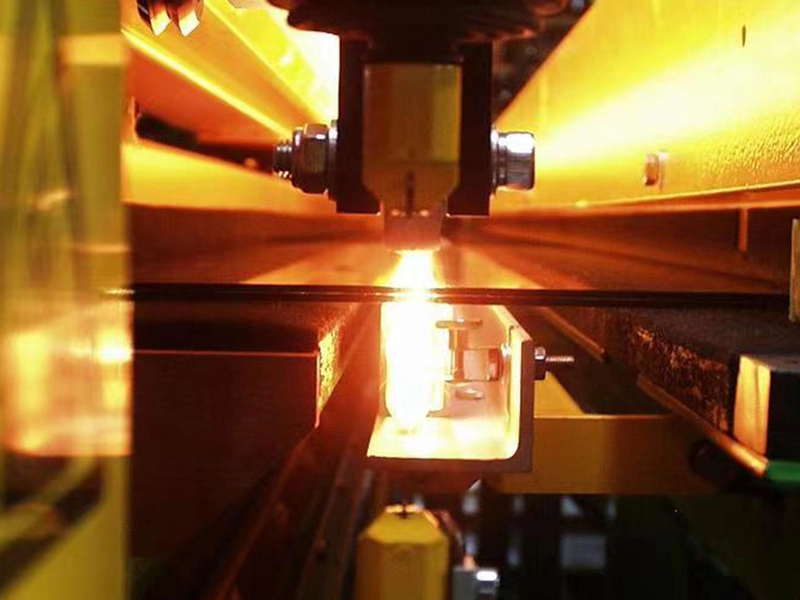
Infrared drying works because the energy goes straight into the glass and the applied layer, not into heating the air around it. In an infrared tunnel, the emitters are arranged to create a controlled thermal field across the conveyor width, so every pass gets the same energy density. We build the system around short-wave infrared (NIR) emitters with fast thermal response. Quartz envelopes give you high temperature stability and resistance to thermal shock—handy when the line stops and starts, or when you switch between thick and thin glass. The upshot is a heating zone that hits setpoint quickly and holds it without big swings.
- Uniform thermal field: The tunnel geometry and emitter layout are set up to cut down hot and cold bands. Uniformity reduces thermal stress and keeps local under-cure from sneaking in.
- Fast response: Infrared heats on demand. When the conveyor speeds up, the zone recovers fast. When the line pauses, you can pull back power to avoid cooking the glass surface.
- Directional radiation: Energy goes where it’s needed—onto the coated surface—so less heat is wasted to the surroundings. That improves energy efficiency and eases the load on plant ventilation. In practice, that means you can run with tighter process windows. If your target surface temperature is 120–150°C for a coating, the tunnel holds it across the whole pane instead of chasing it with hot air blowers that set up convection gradients.
Why it holds up in production: throughput, quality, and operating cost
Glass plants run on takt time. Every second lost to slow heating, warm-up, or rework adds up. An infrared tunnel dries on the move. It heats the surface directly, so you don’t wait on conduction through the pane or for a massive oven body to come up to temperature.
- High-throughput lines: With rapid response, the tunnel keeps pace with high-speed coating lines and lamination prep stations. You can push line speed without giving up cure depth or film integrity.
- Quality control: Uniform heat lowers the risk of thermal shock and stress marks. Coatings cure evenly, which cuts waviness and improves optical clarity. Lamination films flow uniformly, which drops rejects from bubbles and inclusions.
- Energy use at industrial scale: Directed radiation means less energy is lost to heating the plant air and equipment. On many lines, operators see a measurable reduction in kWh per square meter compared to convection-heavy systems, especially on intermittent schedules.
- Drop-in integration: The tunnel is engineered to fit into existing lines. You can specify it to match conveyor widths, heights, and standard power connections so the retrofit doesn’t force a full line rebuild. This matters when you’re running multiple shifts and a mixed product slate. You want the heating section to behave the same on Monday morning as on Friday evening, regardless of glass thickness or coating load.
The practical details: installation, compatibility, and real-world limits
Infrared tunnel drying is solid, but it’s not set-and-forget. You get the best performance by nailing three practical items.
- Line integration and clearances: Infrared emitters need line-of-sight to the glass and enough spacing for maintenance access. If the tunnel is jammed up against other equipment, reflectors and emitter access get awkward, and uniformity suffers. Plan your clearances during layout.
- Glass and coating compatibility: Coated glass has different emissivity, and some films are sensitive to peak temperatures. The process has to be tuned to the product. Start-up means mapping surface temperature across the pane with a calibrated pyrometer and validating cure against adhesion and optical tests. Once the profile is locked, the tunnel repeats it.
- Emitter life and maintenance: Quartz NIR emitters have long service life, but they do age. Keep a spare set on the shelf and a scheduled replacement window. If you run 24/7, carry a buffer so you can swap without stopping the line. One more reality check: infrared drying is surface-first. For thicker laminates or deep coatings, you have to make sure the thermal profile delivers enough energy to the core without overheating the surface. In most glass applications, you manage that by controlling power density and conveyor speed together, not by cranking the heat. If you want consistent curing, fewer stress-related failures, and predictable energy use, an infrared tunnel is the right tool. It turns drying from a variable into a measurable, repeatable process that supports higher yield and steadier throughput.